

| Стихи |

|
Проза |
|
Музыка |
|
Культура/Искусство |
|
Религия |
|
Ремесленники |
|
Фестивали, ярмарки, праздники |
|
Идеи |
|
Общества |
|
Блоги |
|


Блоги - Новости
|
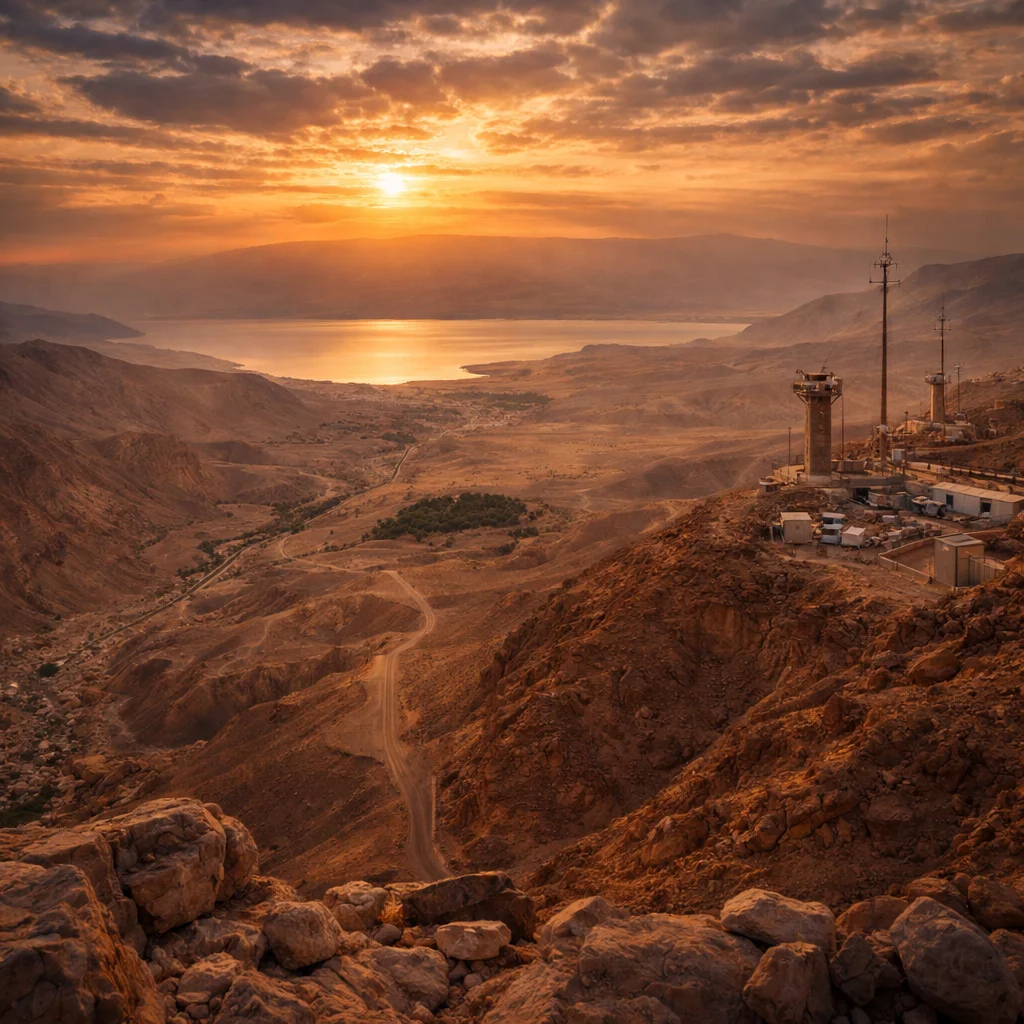
The Arava Desert does not look like a place designed for long-term habitation. It stretches from the southern edge of the Dead Sea to the Gulf of Eilat, forming a narrow, sun-scorched corridor between Israel and Jordan. Rain is rare. Summer temperatures are extreme. Soil is saline and unforgiving.
And yet, the Arava is not a failure of geography. It is one of Israel’s most deliberate experiments in making hostile land functional.
This is not a story about beauty. It is a story about systems.
Geography Without Illusions
The Arava lies along the Syrian–African Rift. It is flat, exposed, and climatically aggressive. Unlike mountainous deserts, it offers little natural shelter. Winds are strong. Shade is artificial. Water must be engineered.
From a planning perspective, the Arava presents a binary challenge:
either abandon the region — or redesign how life works inside it.
Israel chose the second option.
Settlement as Policy, Not Romance
Communities in the Arava were not built because the land invited them. They were built because the state decided the corridor mattered — strategically, economically, and demographically.
Settlements here are sparse but intentional. Every village, agricultural station, and research center exists because it performs a function.
This is why the Arava feels different from other deserts. There is no mythology of retreat or isolation. The region operates like a production line stretched across sand.
Agriculture Where It Should Not Exist
The Arava is often cited internationally as proof that “deserts can bloom.” That phrase is misleading.
Nothing blooms here naturally.
Agriculture in the Arava works only through:
-
precise irrigation,
-
controlled microclimates,
-
constant monitoring of soil chemistry,
-
and technological adaptation.
Greenhouses dominate the landscape. Crops are chosen not for tradition, but for survivability and export value. This is agriculture as engineering.
Failures are not hidden. They are studied.
Infrastructure Under Constant Stress
The desert tests infrastructure daily. Pipes expand and contract. Roads degrade faster. Buildings crack under thermal pressure.
As a result, construction standards in the Arava differ from central Israel. Materials, insulation, ventilation, and layout matter more than aesthetics.
This explains the demand for specialized renovation and construction services adapted to desert conditions. Companies like https://renovation.nikk.co.il/ operate in northern Israel, but the principles they apply — durability, system thinking, long-term maintenance — mirror what the Arava requires in extreme form.
In the desert, shortcuts fail quickly.
Borders Without Drama
The Arava also functions as a border zone. Israel’s peace treaty with Jordan is physically embodied here. The border is long, quiet, and mostly invisible — until it isn’t.
Security in the Arava is based less on confrontation and more on monitoring. The terrain offers visibility but little cover. Movement is easy to detect, hard to hide.
This creates a paradox:
the desert is open, but tightly controlled.
Innovation as Survival Mechanism
What the Arava lacks in natural resources, it compensates for with experimentation.
Solar energy fields, water recycling systems, and agricultural research stations are common. Failure rates are accepted as part of progress.
This mindset aligns naturally with experimental digital and media projects — platforms designed to test ideas without fear of collapse.
Domains like https://shkrek.website/, built for flexible content and experimental formats, reflect the same logic the Arava lives by:
try, observe, adjust, repeat.
The desert does not punish mistakes. It punishes stagnation.
The Human Factor
Life in the Arava is physically demanding. Distances are long. Services are limited. Social circles are small.
This creates a specific population profile:
-
people tolerant of isolation,
-
professionals used to multitasking,
-
families adapted to limited choice.
The region filters out those who expect convenience.
What remains is not heroic endurance — but practical resilience.
Digital Connectivity Over Physical Density
Because population density is low, digital infrastructure becomes critical.
Education, healthcare coordination, logistics, and administration rely on stable online systems. In many ways, the Arava is more digitally dependent than urban Israel.
International digital hubs such as https://nikk.uno/ represent how Israeli projects scale outward: local experimentation paired with global visibility.
The Arava itself is local. Its logic is global.
Tourism Without Comfort Promises
Tourism exists in the Arava, but it is honest.
There are no illusions of luxury. Visitors come for silence, geology, astronomy, and heat. Activities are framed as experiences, not relaxation.
Warnings are explicit. Preparation is expected.
Search-and-rescue operations remain a constant reminder that the desert does not negotiate.
Environmental Limits Are Non-Negotiable
Climate change does not arrive gradually in the Arava. It amplifies existing extremes.
Heat waves grow longer. Water management becomes tighter. Planning margins shrink.
This forces the region into continuous recalibration. Policies that work one decade may fail the next.
The Arava does not allow nostalgia. Only adaptation.
Why the Arava Matters Beyond Its Size
The Arava matters because it demonstrates a core Israeli principle:
territory is not valuable because it is easy — but because it can be made functional.
The region is not symbolic like Jerusalem.
Not scenic like the Galilee.
Not commercial like Tel Aviv.
It is operational.
And that makes it strategically honest.
Media Silence Is Part of the Story
Unlike other regions, the Arava rarely dominates headlines. When it does, it is usually due to:
-
environmental incidents,
-
infrastructure failures,
-
cross-border coordination,
-
or scientific breakthroughs.
The absence of constant media attention is not neglect. It reflects stability.
The desert does not perform. It works.
Final Observation
The Arava Desert is not a success story in the traditional sense.
It is a maintenance story.
Everything here exists because someone decided it should — and then kept it functioning under pressure.
In Israel, that may be the most realistic definition of achievement.
Другие блоги автора в этом разделе:

|
© 2011 - 2013, Mybaltika.info Сделать стартовой Добавить в закладки |
Варианты наших баннеров
Пользовательское соглашение Связаться с нами Администрация |
Как повысить рейтинг/баллы


|
 Разработка
сайта: |